

NYC is known as “the city that never sleeps,” which means it arguably has one of the most developed night scenes on the planet. But before we scroll down to the positives, it’s worth acknowledging a few downsides. The volume alone can test your patience especially if you’re trying to sleep at 3am while a group of bar-hoppers is screaming at the curb. The night sky is basically erased, so this is not the city for stargazing. Rats, roaches, and mountains of garbage tend to materialize more often once the day-time crowds thin out. And in certain neighborhoods, the members-only, gatekept nightlife scene can make the city feel less like a playground and more like a velvet-rope maze.
The City Never Sleeps (Even Post-Covid)
New York’s late-night DNA got tested and dampened during Covid. The 24/7 subway actually had closing times. But there are restaurants that still run late, many bars stay open in the early morning, and the energy on the streets still crackles past midnight. The city has a natural resistance to “quiet.” The 24/7 subway, late buses, Citi Bikes, and walkability mean you’re never stuck and never forced to go home early. You can bounce from Harlem jazz to a Brooklyn warehouse to a Midtown rooftop without having to check the time for the last train. Movement stays fluid, and that keeps nights unpredictable. There’s also a safety in numbers that comes with many still awake at all hours.
Density = Effortless Bar Hopping
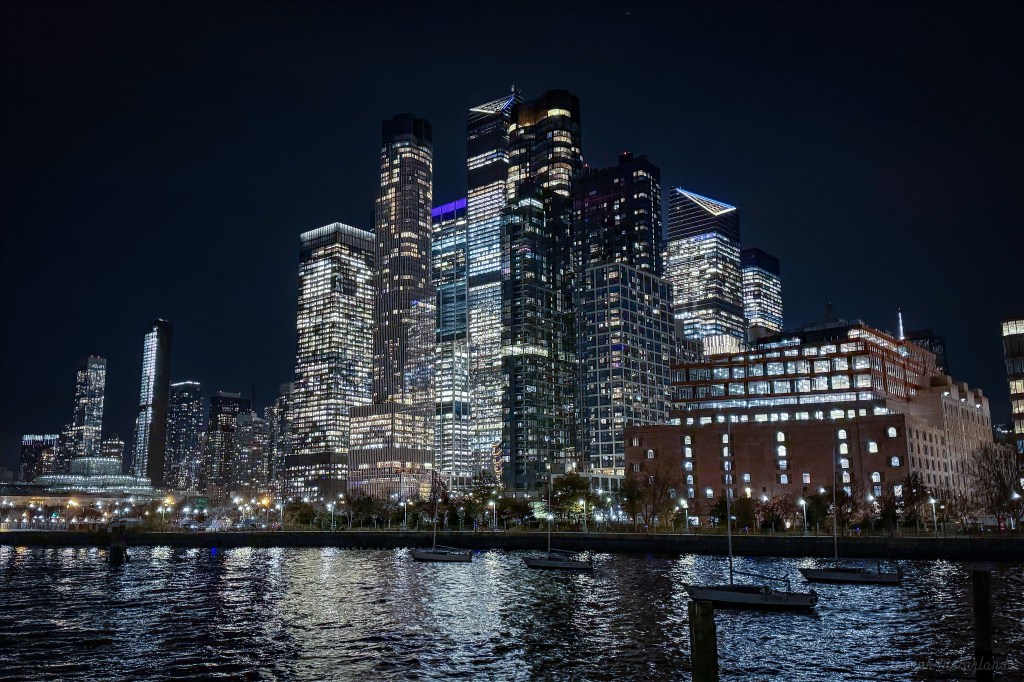
Many don’t strictly plan the night here; you drift through it. Entire neighborhoods and avenues such as the West Village, East Village, Astoria, Hell’s Kitchen, 8th Avenue and far more let you walk from one late-night vibe to the next in minutes. No long rides, no suburban dead zones. Instead of a single nightlife identity, New York stacks tiny subcultures on top of each other. A queer dance bar, a comedy basement, a wine cave, a Dominican karaoke spot, and a chess circle might all sit within 200 feet. It creates spontaneous, cross-pollinated nights no other city replicates.
Rooftop Bars With Real Views
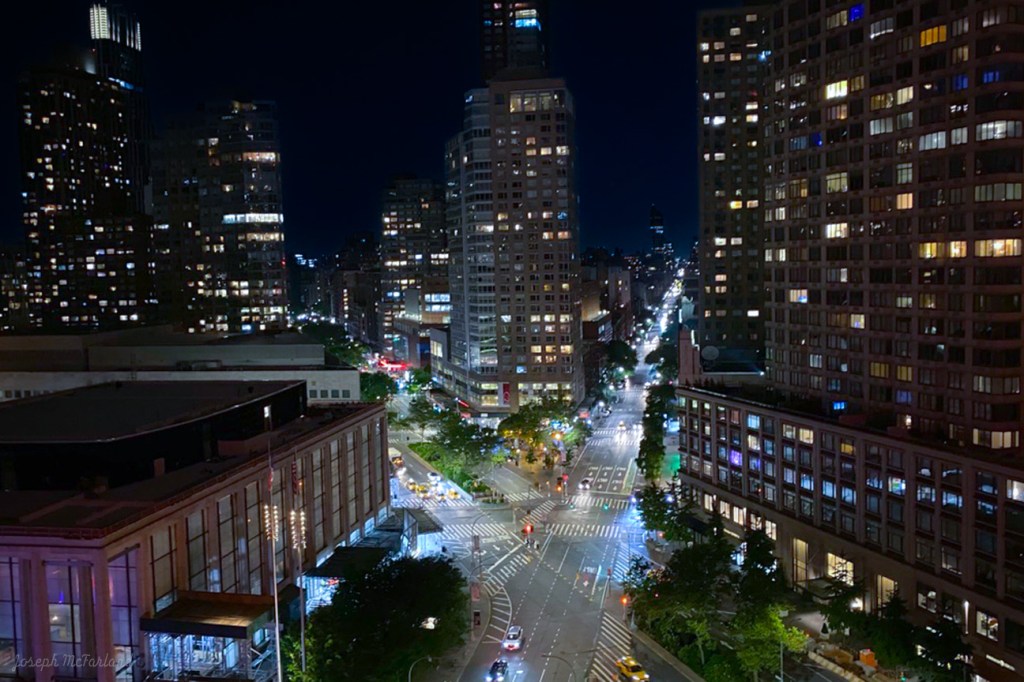
NYC’s vertical nature opens the door to bars with the best views around. From Midtown skyscraper decks to Brooklyn warehouse rooftops, you get skyline views that actually transform the feel of a night out. Most cities have a ground-level nightlife. NYC has nightlife on streets, rooftops, basements, mezzanines, fire escapes, courtyards, penthouses, piers, and subways. The city becomes a multi-level stage you move vertically through, not just horizontally. It feels like exploring different dimensions inside the same night.
Neighborhood Nightlife Personalities
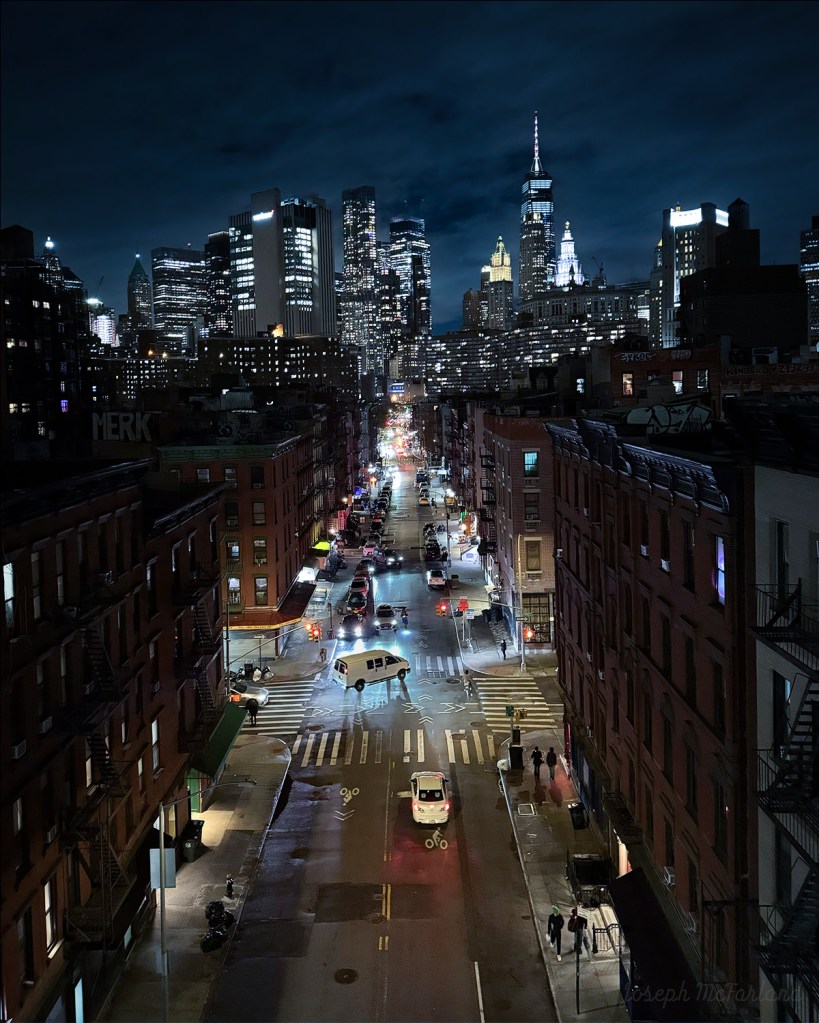
Every area has its own plotline: Harlem’s live music, Bushwick’s DIY warehouse scene, LES dive bars, Midtown’s corporate cocktails, Chelsea’s art-adjacent lounges. You can shift genres of nightlife just by crossing a single avenue. You choose the mood of your night the way you’d choose a movie genre, and the city immediately gives you a set, a soundtrack, and a cast.
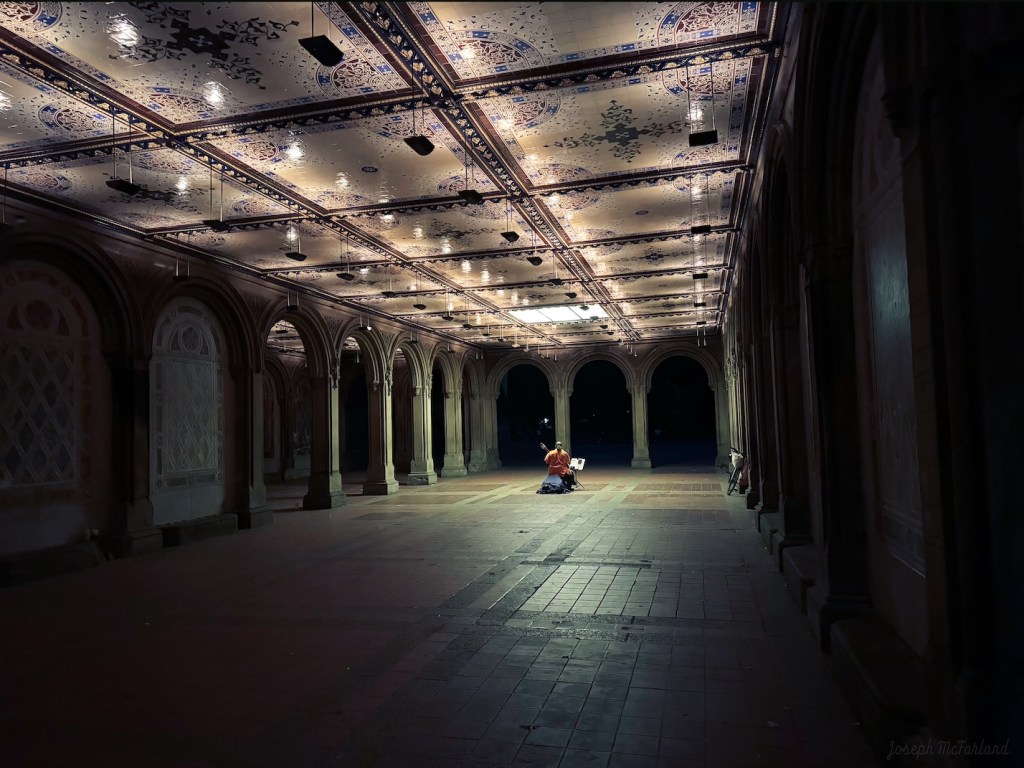
The Underground + Hidden Scene
Speakeasies, back-room bars, unmarked basements, and lounges keep the sense of discovery alive. NYC nightlife rewards curiosity. You turn one wrong corner and find something unforgettable. What makes the hidden scene feel so distinctly New York is that secrecy isn’t about exclusivity but about atmosphere. These places often exist because the aboveground city is too loud, too bright, too commercial. So nightlife retreats into corners, alcoves, back halls, former boiler rooms, abandoned storage spaces, old factories, and reimagined basements, carving out spaces where the energy shifts the second you step inside. The city holds entire worlds behind mediocre storefronts that tourists walk past without a glance.
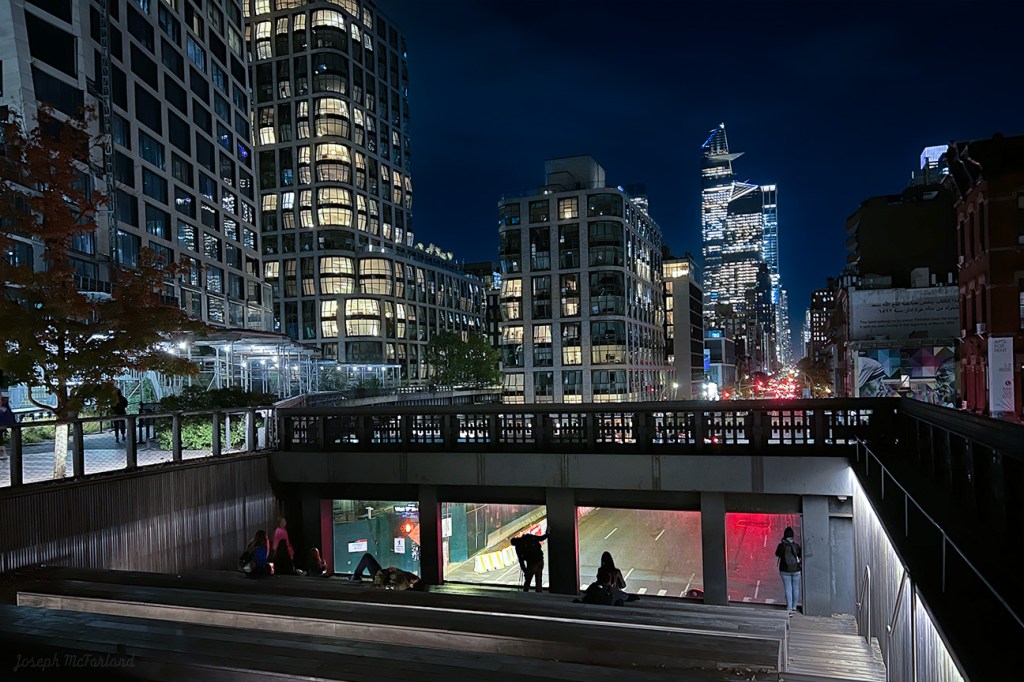
The Crowd Diversity
You meet everyone here. Artists, finance people, tourists, locals, immigrants, students, older regulars, after-shift restaurant workers. Nightlife in NYC is a social mixer across cultures, ages, classes, and styles. Jazz bars, live Latin sets, warehouse DJs, indie shows, Broadway cabarets, drag nights. It’s the fact that nightlife dissolves social roles. A dishwasher, a CEO, a drag performer, a tourist, a nurse on break, a skateboarder, and a banker can all be in the same tiny bar at 1am and no one knows who’s who. Hierarchy blurs; everyone becomes “just another New Yorker for the night.” At night you can disappear into the crowd, reinvent yourself, experiment with a different version of you. No one watches, no one cares, everyone’s focused on their own story.
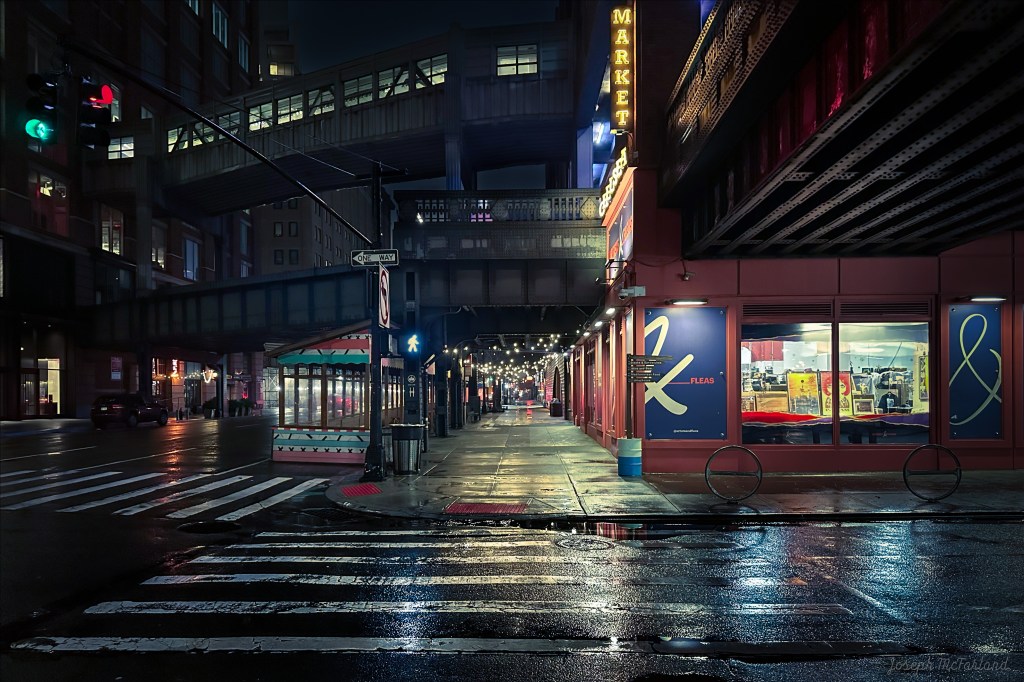
The night aesthetic
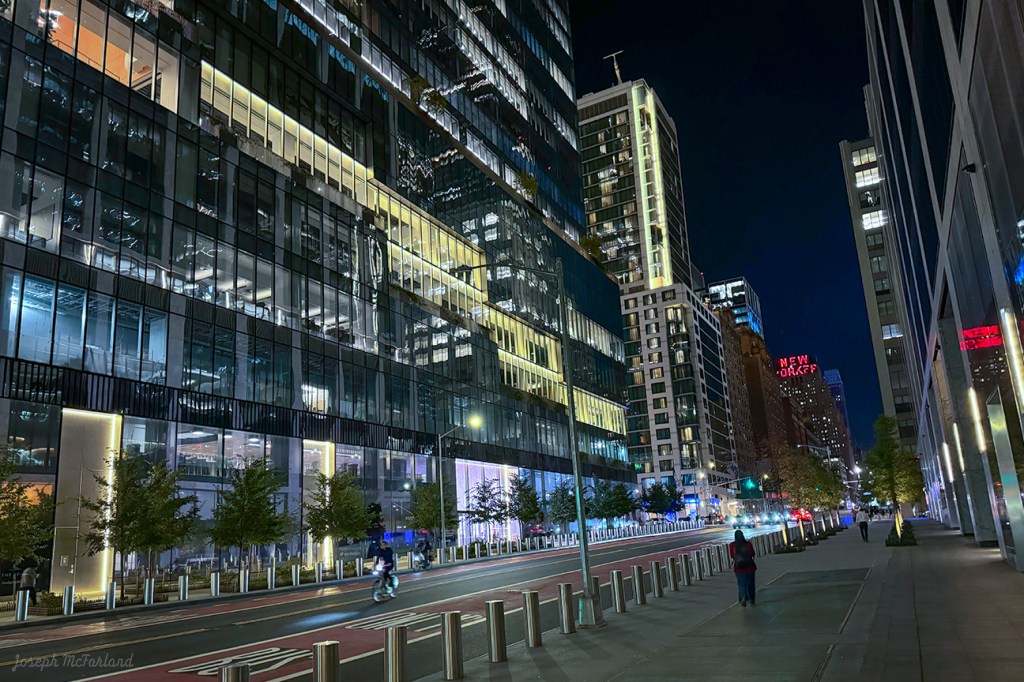
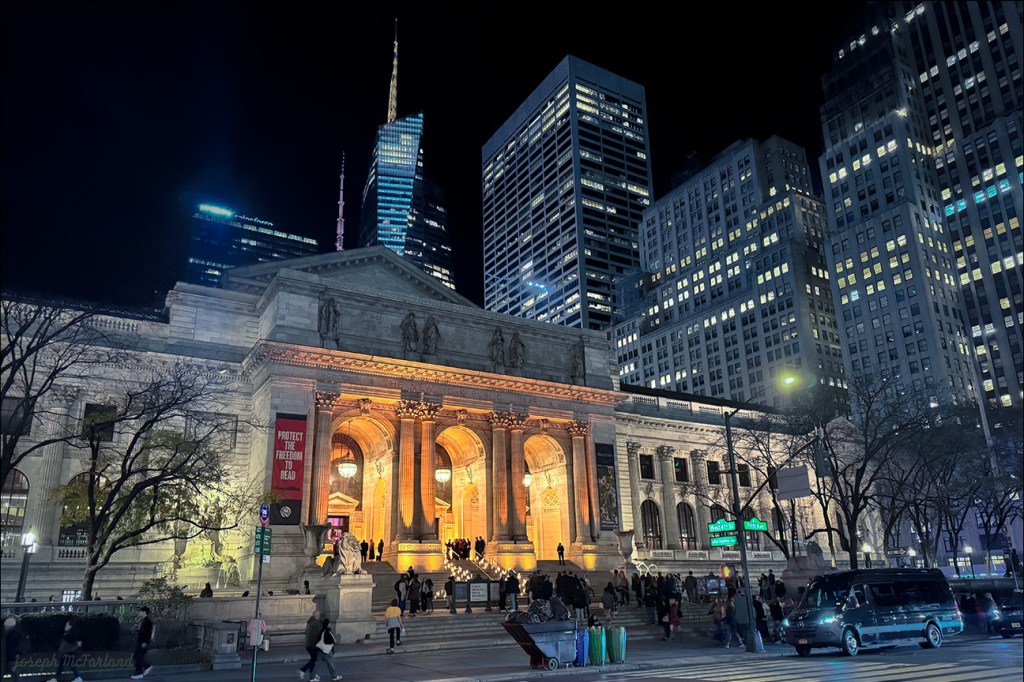
NYC has a night look: the wet asphalt reflections, neon strips on bodega signs, shadowy side streets, steam hitting headlights, skyscraper lights creating a ceiling of color. Rows upon rows of lit windows creating an artificial array of stars, each representing someone’s story. Walking at night is visually cinematic in a way other cities simply don’t have. Daytime New York is sharp, loud, structural. Nighttime New York softens the geometry and heightens the emotion. Lines blur. Corners darken. Colors intensify. Glass towers become lanterns, not buildings. Even mundane objects take on drama: a puddle becomes a portal, a fire escape casts a noir shadow, a deli fridge glows like a shrine. Even silence feels choreographed. The city isn’t only illuminated; it’s embellished since businesses can focus light on parts they want you to see like the strategically placed lighting in a good film. Light bounces off water towers, cranes, and old brick in ways that feel accidental and deliberate at the same time.
The Nighttime Economy Is Its Own Industry
NYC has a formally recognized Office of Nightlife, zoning rules that support late-night businesses, and an enforcement structure designed to manage nightlife rather than suppress it. Few cities institutionalize nightlife as a real economic engine. New York treats night as a shift, not an afterthought. In NYC, a huge share of artists, designers, writers, coders, editors, actors, and freelancers keep irregular hours. Their workday often starts in the afternoon and bleeds past midnight. That means bars, cafes, delis, and public spaces stay populated with people whose schedules naturally extend the city’s waking hours. In most cities, nightlife depends on weekend partiers and in New York, it’s sustained by an entire workforce whose peak productivity happens after dark.
Tourism Extends the Night
NYC gets millions of visitors who keep the streets active long after locals go home. Tourists don’t follow normal sleep cycles, they’re out late because of jet lag, excitement, or trying to “fit everything in.” That constant influx adds bodies, money, and energy to the night hours, keeping venues alive in a way cities with smaller tourist economies can’t sustain. A late broadway show opens onto a busy Times Square for late night food before going back to the hotel.

Privacy without the emptiness
For all its noise and motion, New York at night has an unexpected quality: privacy. Not emptiness, privacy. The city stays awake, but it also fractures into hundreds of tiny pockets where you can vanish for a moment with someone you care about. Even in a city of millions of people, NYC nights carve out pockets of intimacy you can’t find during the day. The city is bright, but it also has shadows: riverside benches, quiet piers, a stoop somewhere in SoHo, tucked-away gardens, empty subway platforms, underlit corners of Central Park’s edges, rooftop perches where you can disappear into the skyline. New York at night gives you privacy without emptiness. You’re never alone enough to feel unsafe, but you’re hidden enough to have a real moment. A quiet conversation, a romantic date by the Hudson, a walk where the city recedes into the background and becomes soft around the edges.The day belongs to everyone.The night gives you space to claim your own little enclave inside the chaos. The city stays alive so you don’t have to hide but it stays enormous so you always can.
 Nocturnal Gotham